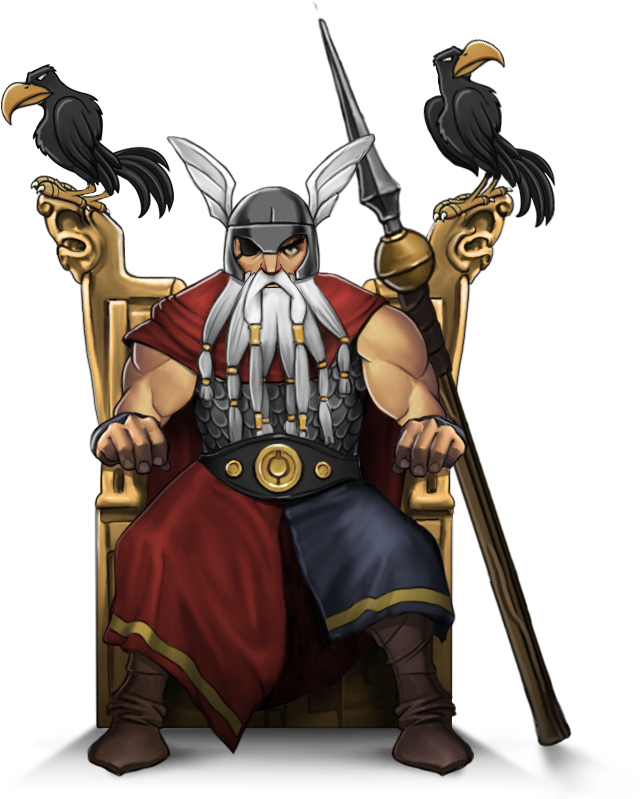
As civilization crumbled under its own hubris during the fall of man, the interconnected world fractured. Ash and fire storms darkened the sky. Disoriented and desperate, humanity scattered in chaos—families split, neighbors became strangers, and bonds of unity unraveled.
Colonists settled in valleys and mountains seeking to rebuild. In wastelands, survival was uncertain. Some settlements overflowed, breeding tension, while isolated outposts fostered independence.
"Why did we come here?" a young woman whispered to her companion as she stood on a rocky outcrop overlooking a desolate plain. Her voice trembled with frustration and exhaustion. "We’ve lost everything, our homes, our stories... even who we are."
Her companion, an older man with silver-streaked hair and haunted eyes, placed a weathered hand on her shoulder. "Because," he said softly, "we had no choice. But here, here we make new stories."
Colonists barely survived. Beasts, hunger, and cold dogged their every day. They fought for food, for land, and rare moments of peace. With struggle constant, little time remained for remembrance, and histories faded. Ancestors’ songs became mere whispers—legends, faint echoes in the night.
"Do you remember the old tales?" asked a child one night as they huddled around a meager fire. Her voice was barely audible over the crackle of flames.
An elder shook his head slowly, his face lined with sorrow. "I remember pieces... fragments of stories that my mother told me when I was your age. But the rest..." He gestured helplessly toward the dark sky above them. "The rest is gone. Lost to time."
Civilization regressed to a pre-steam, early medieval era marked by scattered villages and crude fortresses. The mechanical hum of cities was replaced by the clang of blacksmiths forging tools for survival.
Idiosyncratic authoritarian communities arose, shaped by founders’ beliefs and fears. One settlement worshipped the sun with stone altars; another revered silence, speaking only during rituals. These beliefs hardened into dogma, and leaders, often self-appointed prophets or warlords, ruled with iron fists.
"Only through obedience can we survive," proclaimed one such leader to his people from atop a wooden platform in the center of their settlement. His voice boomed across the square where villagers knelt before him. "Questioning our ways invites chaos! And chaos... is death."
With communities isolated, mistrust grew and stories spread: forests whispering, glowing rivers, gold-scaled creatures from caves. Fact and fable blurred.
"Mama," a boy asked one evening as they tended their small vegetable patch, "is it true what they say about magic? That it’s real?"
His mother hesitated before answering, her hands pausing over the soil. "That’s what they say," she murmured, her gaze distant. "But if it is real... it’s not something we should meddle with."
Magic brought wonder and fear. Some communities embraced it warily as a tool; others condemned it as heresy, hunting practitioners.
Villages grew into intolerant city-states, fortifying borders against outsiders and ideas. Travelers faced suspicion at gates.
"Declare your purpose!" barked a guard as he leveled his spear at a weary traveler standing before the city gates.
"I seek shelter," replied the traveler, raising his hands in supplication. "Food... water... nothing more."
The guard narrowed his eyes but eventually stepped aside with a begrudging nod. "Enter, but know this: one wrong step, and you’ll wish you’d stayed out there."
Beliefs clashed and city wars erupted. Armies marched under banners of faith or ideology; battle scarred fertile fields.
"He fights for false gods!" roared one soldier as he clashed swords with his opponent on a smoke-filled battlefield.
"And you fight for tyrants!" spat back the other before driving his blade forward.
War left scars on land and hearts. Generations knew only conflict until, weary and disillusioned, they sought another way.
Yearning for freedom, many migrated from city-states to uncharted lands seeking hope.
"I’m done living under their rules," declared one woman as she packed her belongings into a crude cart alongside her family’s meager possessions. Her husband nodded grimly beside her while their children watched silently from the doorway of their home, the only home they had ever known but were now leaving behind.
These migrations created new settlements, marking a transition from fractured, warring city-states to communities where diversity and cooperation could gradually take root. Over time, these fledgling villages grew, forming the foundations for thriving societies and future empires, each still marked by old scars and hard-won lessons.
And so began a new chapter in mankind’s story—a chapter shaped by resilience and reinvention, born from the shift of scattered peoples into new alliances. Yet, this era was always haunted by echoes from its fragmented beginnings.
The Rise of the Kingdoms
The migration rolled across fractured lands, scattering people into enclaves, each clinging to customs and beliefs. Families once united now found themselves divided by the unknown, forging paths that would shape civilization’s contours. In one corner, a group huddled around a fire beneath crumbling skyscrapers, faces marked by soot and fear. "We can’t go back," a grizzled man rasped, his gaze fixed on the city ruins burning on the horizon. "What we were...it’s gone. We have to build anew." Beside him, a woman gripped a scrap of parchment, brows furrowed with worry. "And if we build it wrong?" she whispered, dread trembling in her voice. He stared into the flames, searching for answers. "Then we learn," he said, his voice steel-edged. "Or we fall."
In this splintered world, governance became a patchwork sewn by desperation and memory. Some revived slavery’s chains, their leaders enforcing control through terror and brute force. Beneath an ancient tree, a boy watched as his father was seized by men in ragged uniforms. "What are they doing?!" he shouted, pounding his fists against his mother’s legs. She knelt, gripping his shoulders, her face pale but resolute. "They’re taking him because they can," she said, teeth clenched. "No one’s left to stop them." Elsewhere, others turned to faith, erecting grand altars beneath starlit skies. A gaunt priest raised his hands to the heavens, voice echoing over the crowd. "We have sinned," he cried, sweat streaking his brow as flames roared. "Only obedience will save us now!" Meanwhile, rebellion flickered in hidden corners where free thinkers conspired by candlelight. Their leader, a wiry woman with streaked silver hair, leaned over a crude map. "Unchecked power destroys," she said sharply, tracing routes on the map. "We need laws shaped by all—not a tyrant." Murmurs of agreement rippled through the gathering as hope kindled in the darkness.
In time, kingdoms began to rise from the ashes of chaos, their foundations mirroring the feudal systems of ancient Earth. At dawn, banners embroidered with sigils of wolves and eagles fluttered above makeshift castles constructed from salvaged stone and timber. Lords and ladies held court in dimly lit halls where tapestries woven from scavenged cloth depicted battles both real and imagined. In one such hall, a young knight knelt before his liege lord, a broad-shouldered man whose crown sat slightly askew atop his unkempt hair. "Do you swear fealty to me?" the lord demanded, his voice echoing against the cold walls as his steel-clad advisors watched silently from the shadows. The knight swallowed hard but nodded resolutely. "I swear it," he declared firmly, gripping his sword hilt until his knuckles turned white. Outside these halls of power, peasants tilled barren fields under watchful eyes, their backs bent under both labor and fear. A farmer wiped sweat from his brow and glared up
Feudal Systems
The main form of governing bodies in the region is akin to a feudal system, a structure that weaves power and obligation into a complex web of loyalty and control. At the apex of this hierarchy sits the King, a figure whose authority extends across the entire kingdom. Yet, his rule, though absolute in theory, is reliant on the intricate chain of command beneath him. The King’s presence commands respect and fear in equal measure; his proclamations resonate through gilded halls, carried by heralds in vibrant livery, their voices echoing with solemnity as they announce royal decrees.
Beneath the King are the Dukes, each charged with managing vast swathes of the land. Picture a duke at his estate: a man of imposing stature, clad in rich velvets and furs, pacing across an expansive map spread atop a long oak table. His voice booms as he barks orders to his advisors and military captains. “The harvest from the southern plains must be taxed at ten percent this season,” he declares, jabbing a finger at the map. “And double the guards along the northern border, bandit activity has been rising.” His steely gaze surveys those before him, gauging their reactions, ensuring compliance. The weight of his responsibility is evident in the faint lines creasing his brow, a testament to sleepless nights spent balancing the needs of his lands with the demands of his King.
Reporting to these powerful Dukes are the lesser nobles: Counts who oversee smaller territories, including clusters of towns and resource-producing regions. Imagine Countess Mariel, wrapped in an emerald cloak trimmed with silver thread, walking through her bustling market square. She stops by a blacksmith’s forge, inspecting the quality of weapons being crafted for her levy troops. “This blade,” she says, holding up a finely forged longsword, “is sturdy work. But it needs better balance.” Her tone is firm but not unkind, and the blacksmith nods vigorously, promising to improve his craft. Mariel’s presence commands loyalty from her people—not through fear but through a genuine care for their welfare. Her days are long and often grueling as she mediates disputes among farmers or ensures that grain shipments reach neighboring towns on time.
This feudal system thrives on one defining principle: loyalty. At every level of this hierarchy, fealty binds those below to those above. The lower nobility swear oaths of allegiance to their liege lords in grand ceremonies held in candlelit halls filled with the scent of burning incense and fresh pine boughs. Kneeling on one knee before their Duke or King, they place their hands over their hearts and vow to provide both taxes and troops whenever called upon.
“By my honor,” says Sir Alden during one such ceremony, his voice steady despite the weight of the moment hanging over him like a storm cloud, “I pledge my sword and my men to your service, my lord. May my lands prosper under your guidance.” The Duke nods gravely before drawing his ceremonial blade and resting it lightly on Alden’s shoulder. “Rise, Sir Alden,” he intones. “May your loyalty never waver.”
The Imperial form of government presents a striking contrast to this feudal structure—a system where power is concentrated entirely within a single city-state and often rests in the hands of one individual. This ruler, known as the Imperator or Emperor, wields absolute authority. The city-state of Goranth serves as an illuminating example. In its golden age under Imperator Alaric IV, Goranth was renowned for its benevolent governance. Alaric would hold court in a grand chamber adorned with mosaics depicting scenes of prosperity: farmers tilling fertile fields under a radiant sun; merchants bartering goods in lively marketplaces; scholars poring over ancient tomes in candlelit libraries.
During council meetings, Alaric would listen intently as advisors presented their concerns—his piercing blue eyes scanning every face around the table while his fingers tapped rhythmically against the armrest of his throne. “We must ensure that every citizen has access to clean water,” he declared during one such meeting, rising from his seat to emphasize his point. “Divert resources if necessary—no expense is too great when it comes to the well-being of our people.” His words carried weight not because they were spoken from a throne but because they reflected genuine compassion.
In contrast stands Sun Ascending, the founding city-state of what would later become the Kingdom of the Sun, a place where rulers were chosen not by bloodline but by merit. Here, governance was rooted in wisdom rather than inheritance. Each election was an event marked by fervent debate and public discourse as candidates presented their visions for the future before vast crowds gathered in amphitheaters carved into sunlit hillsides.
“I ask not for your votes out of ambition,” proclaimed Lysandra during one such election campaign, a woman whose fiery red hair seemed almost ablaze under the midday sun, “but because I believe we can build something extraordinary together: A society where no child goes hungry; where every artisan’s work is valued; where justice prevails over greed.” Her words stirred something deep within her listeners; murmurs of agreement rippled through the crowd like waves lapping against shorelines.
Regardless of whether power resides within feudal estates or imperial city-states—or whether rulers govern through fear or compassion, one truth remains constant: those who hold power must command both respect and loyalty from those they govern. Yet this loyalty comes at a cost, taxation fills royal coffers while armies are raised from among common folk who leave behind families and farms to serve under banners fluttering proudly against azure skies.
In these systems lies an inherent tension, a delicate balance between the duty owed upwards to rulers and the protection promised downwards to citizens. This balance shapes lives within these realms far beyond mere politics or governance, touching upon questions about human nature itself: What does it mean to serve? To lead? And most importantly—to belong?
City States
A City-State is essentially a single town or city that has grown up around a single shuttle or a cluster of settler pods, the remnants of humanity's early attempts to forge new lives on alien worlds. These settlements, born from necessity and survival, often sprawl outward unevenly, their oldest districts clustered tightly around the towering husk of the original shuttle or the crumbling domes of settler pods. Streets wind like arteries through the city, narrow and crooked where the oldest buildings lean on one another for support, while broader avenues stretch out toward newer growth at the city's edges.
The heart of every city-state pulses with life. Merchants shout their wares in crowded markets, their voices competing with the clanging of blacksmiths' hammers and the distant hum of the markets. Children dart between vendors' stalls, clutching stolen fruit or tossing handmade toys, their laughter ringing out above the din. The air is thick with the aroma of sizzling meats, tangy spices, and the faint metallic tang of industrial fumes drifting from the outskirts. Even the walls of buildings seem alive, covered in murals depicting the city's history or scrawled graffiti voicing discontent.
Yet, despite their shared beginnings, no two city-states are alike. Each has evolved based on its founders' values and circumstances. At one extreme lies governance through a Council of Notables, a collective leadership often drawn from the city's most influential figures. At the other extreme is an Imperial rule, where a single leader claims absolute authority over all.
When a city-state is ruled by a Council of Notables, its governance feels intricate and layered, much like an elaborate dance where each step is calculated. These councils may be elected by citizens or chosen through other means steeped in tradition or pragmatism. For example, in some city-states, membership on the council is hereditary, passed down through generations like an heirloom. In others, it might be granted to the heads of powerful guilds or trade unions—those who hold sway over essential industries such as agriculture, mining, or trade.
Take, for instance, the bustling city-state of Brennans Keep. Here, the Council is comprised of twelve members drawn from its most prestigious guilds: blacksmiths, merchants, mages, and even healers. Their debates are held in an ancient hall, its vaulted ceilings etched with constellations that glitter faintly in torchlight.
"Master Rillian," boomed Maren Davik, her voice cutting through the low murmur of discussion as she rose from her seat at the long stone table. Her dark robes swished around her ankles as she gestured toward a map unfurled before them. "If we divert resources to expand irrigation systems for the lower districts, it could jeopardize our ability to meet trade quotas next season."
Rillian Harthor, a wiry man with silver-threaded hair and ink-stained fingers, a mark of his role as head scribe, leaned forward on his elbows. "And if we don't expand those systems," he countered with quiet intensity, "the crops will fail entirely in those districts. Do you propose we let half our people starve to ensure full coffers?"
The room fell silent except for the faint crackling of torches along the walls. Eyes darted between Maren and Rillian as tension thickened like smoke in the chamber. Finally, another voice broke through, a calm yet commanding tone belonging to Lira Vossar, head of the Mages' Guild.
"Enough," Lira said firmly. She stood slowly, her hands clasped behind her back as she surveyed her fellow council members with piercing gray eyes. "We cannot afford division, not now when we stand on such precarious ground." She paused before adding softly but resolutely, "We must find balance."
This form of governance, though prone to disagreements and delays, offers a semblance of representation and collaboration. It mirrors aspects of modern democracy but remains firmly rooted within the confines of its city-state's borders.
At the opposite end lies Imperial rule: swift, decisive, and often ruthless. In such city-states, power is consolidated under one individual, a ruler who commands absolute loyalty from their subjects. This ruler enforces compliance through love, admiration, or fear. These leaders often claim divine right or military conquest as justification for their rule. In some cases is rising to the challenge of saving the people. Much like the Vikerskis and the Innland Inn.
Such rulers wield immense power capable of either forging great legacies or leaving ruinous scars upon their domains, depending on how they choose to wield it
Tribal
Some landings were so severe that those colonists failed to save much of anything. Their ships had come down in violent bursts of fire and metal, smashing into untamed wildernesses with no regard for their cargo or passengers. Survivors crawled out from the wreckage, bruised and trembling, clutching at what few shards of technology or supplies hadn’t been obliterated in the chaos. The air was often thick with smoke, the acrid smell of burning metal mingling with the raw scent of freshly churned earth. Faces streaked with grime and despair turned to one another, silently asking the same question: *How do we survive this?*
“Over here!” a woman’s voice broke through the din one such day. Her name was Ceryn, a former engineer. She waved frantically from the remains of a shattered cargo bay, her eyes wide with urgency. “I found something, tools, maybe food. Help me dig it out!”
A young man stumbled toward her, his face pale beneath streaks of soot. “Tools?” He coughed violently as he dropped to his knees beside her. “Gods, I hope it’s tools. We’re dead without them.”
Together, they clawed at the debris with bare hands, ignoring the sting of sharp edges cutting into their skin. Around them, other survivors began to gather, drawn not by hope but by necessity. Each knew instinctively that they couldn’t make it alone. And so they formed impromptu groups—shared-resource communities born out of desperation and necessity.
These early alliances were fragile at best. Arguments flared over who contributed more or who deserved the limited food that had been scavenged. One night, as a fire crackled weakly in their makeshift camp, an older man named Rorick stood and addressed the group.
“We’ll tear each other apart if we keep this up,” he said, his voice gravelly but firm. His weathered face caught the flickering firelight, making him seem both ancient and resolute. “We need rules. Structure. A leader.”
“Who made you the boss?” a younger woman shot back, her arms crossed tightly over her chest.
“I’m not saying it should be me,” Rorick replied evenly. “But someone has to step up before we starve or kill each other.”
The group fell silent, uneasy but unable to argue against his point. And so began the first seeds of tribalism, a rigid structure born from chaos.
As time passed and these tribes solidified, their cultures diverged in striking ways. Some became nomadic wanderers, following game trails and seasonal patterns like shadows across the land. Others grew increasingly authoritarian, clinging to strict hierarchies and rigid belief systems as if order alone could shield them from the unpredictable world around them.
As these tribes spread across new territories—a necessity once their burgeoning populations exhausted local resources—they carried their conflicts and ideologies with them like seeds scattered on the wind. Sometimes tribes split not because of scarcity but because consensus could not be reached on matters of belief or leadership. One such schism occurred within a forest-dwelling tribe known as the Verdant Walkers.
“I can’t follow you anymore,” declared Maelis, a soft-spoken but resolute hunter, as she stood before her leader under a canopy of ancient trees. Her bow hung loosely at her side.
The leader frowned deeply. “And why is that? Have I not led us well?”
“You have,” Maelis admitted quietly. “But you no longer listen to reason, you only listen to fear.”
With heavy hearts but no room for compromise, Maelis and those who shared her views departed into the wilderness that very night.
In time, geography began to shape these tribes as much as ideology did. Those who settled on the sweeping Plains of Morag adapted to its vastness by embracing nomadism entirely. They became one with its endless horizons and shifting winds, their lives tied closely to the animals they revered above all else.
The Tribes of Capall (horse) roamed farthest and fastest across Morag’s golden grasses; their bond with their steeds was almost supernatural. Children learned to ride before they could walk; songs sung around campfires told tales of warriors who outran storms and rival clans alike.
Meanwhile, the Eallach (Cattle) Tribe moved more deliberately but no less purposefully—they followed great herds that provided milk, meat, and hides for clothing. Their culture revolved around patience and endurance; even their dances mimicked the slow but steady rhythm of hooves on earth.
In contrast stood the Cat Tribe—silent hunters who revered stealth above all else—and Madra (Dog), whose loyalty to one another mirrored that of their canine companions.
Those who landed in dense forests took on an entirely different character. These quasi-nomadic tribes developed an almost spiritual relationship with their surroundings. When resources grew scarce in one area, when game became too elusive or plants too sparse, they moved on without hesitation, leaving behind only faint traces of their presence: a circle of stones where fires once burned or carvings etched into tree bark like whispers left for those who might come after them.
The Hillmen were similarly transient but operated on a predictable cycle dictated by seasons rather than scarcity alone. Summers were spent high in cool mountain meadows where wildflowers bloomed thickly underfoot; winters drove them down into sheltered valleys where food could still be found amidst snow-laden branches.
Each tribe's way of life reflected not just survival but adaptation—a testament to humanity’s resilience when faced with unimaginable odds.